
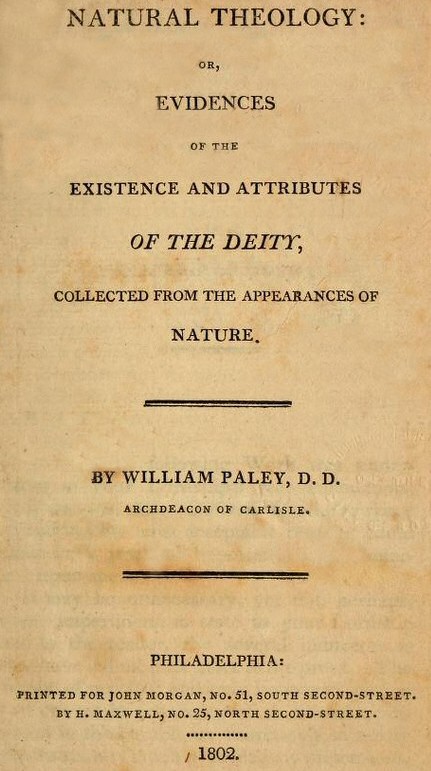
One of the most powerful arguments for the existence of the Divine Creator is known as “Paley’s Watch.” In his book, “Natural Theology,” which was published in 1802, William Paley argued that if you stumbled upon a watch whilst walking across the heath, even if you had never seen a watch before, nor knew how it worked, you would still conclude from the intricate nature of the object that it had not come about by accident; it was something that had been intentionally designed and manufactured—there must have been a Watchmaker. Similarly, the amazingly complex intricacies of the natural world speak of an intelligent Designer and Creator. Nowadays, as never before, that argument can be supported by the astonishing discoveries in cell biology of irreducibly complex systems that defy explanation by small incremental, unguided, purposeless mutations. So great is the evidence that the tide is turning against traditional neo-Darwinist theories, prompting a search for new explanations (see January 2026 Bible Magazine).
But one response of the hardened evolutionist is to claim that there are “hundreds of examples” of poor and flawed design, just what would be expected by evolution—an all-powerful Divine Creator would never have done it that way! One evolutionist, Nathan Lents, wrote a book called Human Errors (2018), and another science writer, Abby Hafer, in The Not-So-Intelligent Designer (2016), claimed that the human eye would deserve an “F- grade in any decent design class.” Richard Dawkins, in The Greatest Show on Earth (2010), even goes as far as saying that the eye is the “design of a complete idiot,” that the “arteries leaving the heart” are “a haphazard mess,” and that one branch of the laryngeal nerve takes “an astonishing detour” that “is a disgrace.”
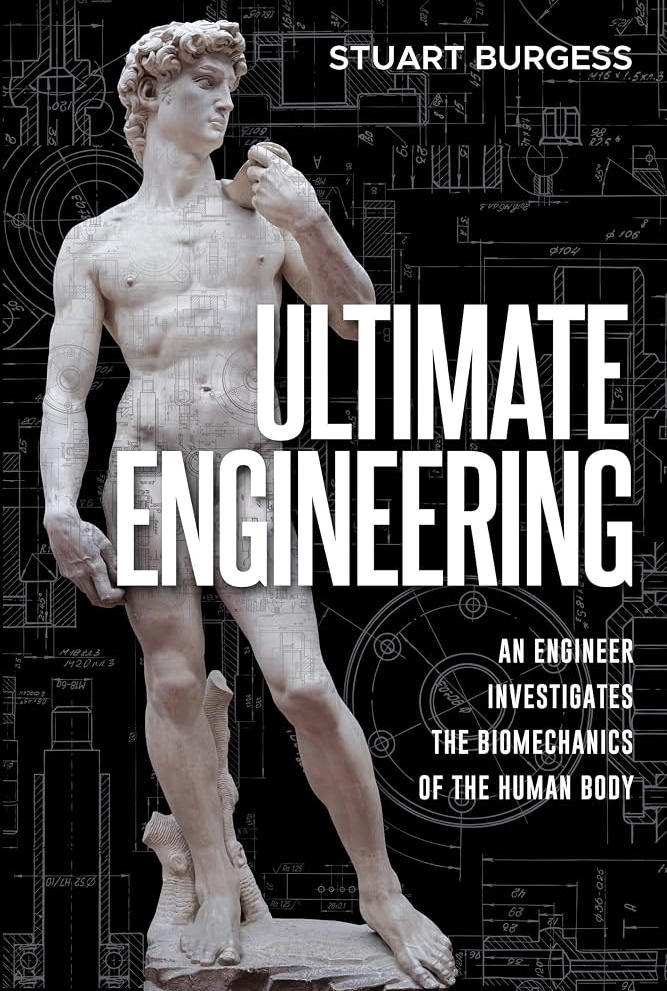
A resounding response to these criticisms has just been published by Discovery Institute Press1 that comprehensively demolishes those charges. The author, Professor Stuart Burgess of Bristol University, is an award-winning design engineer with an outstanding academic and professional reputation as a world-class biomimetics inventor and researcher. In Ultimate Engineering, Professor Burgess sets out the evidence for superb engineering design in the human body and faces head-on the claim that the body bears the hallmarks of poor design. He points out that, though the criticisms are made by biologists who have significant influence upon the public mind, they are not design engineers and are not qualified to pontificate about flawed design. The truth is that, in example after example, professional design engineers stand in awe of the brilliance of the design in nature. Stuart Burgess says,
“I have helped design prosthetics, spacecraft for the European Space Agency, and the fastest track bicycle in the world for the British Olympic team. For four decades I have worked alongside top researchers in biology and engineering, and together we are not only awestruck by the engineering marvels of the biological realm but inspired by them to make significant engineering breakthroughs outside of biology. That pursuit, now a sub-discipline of its own, is known as biomimetics.”
Readers with an engineering background will find many gems in the details of the book. Here are just a few highlights that illustrate the author’s approach and conclusions.
The foot-ankle complex: “an ingenious triple-arched structure that has astounded engineers.”
Experts in biomechanics view the human ankle-foot complex as a masterpiece of engineering. And yet there are evolutionists who insist that “unnecessary” bones of the ankle joint are evidence of bad design—“No engineer would design a joint with so many separate parts.” Evolutionist Nathan Lents went on to argue that “because many of the bones of the ankle do not move relative to one another they would function better as a single, fused structure, their ligaments replaced with solid bone.” In response, Stuart Burgess replies—“It is hard to express the magnitude of the error of that statement … It is very well known in the fields of medicine and biomechanics that ankle fusions lead to a significant degradation of ankle performance.”
He says,
“In studying the foot, I was awestruck by the level of sophistication and precision design. In 2023 I published a paper in the journal Biomimetics on an advanced prosthetic foot design developed by my research team at Bristol University. The design described there is one of the first to copy the individual ankle bones and ligaments of the human foot. A key finding of my paper was that the human foot is far superior to any prosthetic foot that engineers have produced. I also explained that the best way to improve prosthetic feet was to copy the design features of the human foot. Lest anyone conclude that this thesis was unacceptable to the biomimetics community, I should note that the paper was selected as the ‘Editor’s Choice’ for the journal issue.”
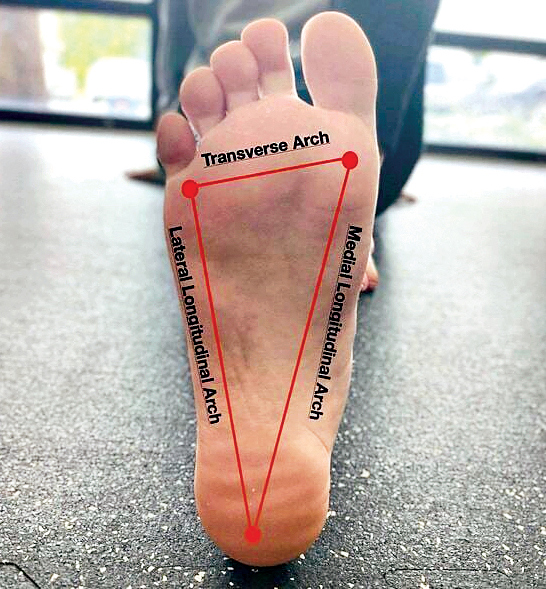
The foot has to be multifunctional, flexible when walking over uneven ground, but able to stiffen when pushing off the ground in the action of walking and running. Part of the brilliance of the design that enables these functions is the “triple-arched structure: a design masterpiece” (Figure 1) that cannot be explained by gradual undirected chance modifications over aeons of time.
The triple-arched structure of the human foot “is unique among mammals and a serious challenge to evolutionary theory. In the fossil record there are no transitional forms between the arched feet of humans and the flat feet of apes. This should not be surprising, because the arches of the foot are irreducibly complex structures that could not evolve step by tiny step. This is because the evolving foot would have to move through a series of intermediates far less functional than either ape feet or human feet, much less functional intermediates that natural selection would readily weed out … all the bones of the feet must be in place to function as arches.” In a “Roman arch” the keystone locks the whole arch. “The human foot also has a keystone for each of the three arches. The talus bone is the keystone for the medial arch. The cuboid bone is the keystone for the lateral arch. And the second (intermediate) cuneiform bone of the midfoot is the keystone for the transverse arch.”
“The claims of bad design by … evolutionists reflect a serious lack of knowledge of engineering principles and the biomechanics of how the foot works. Their misguided claims of bad design illustrate the debilitating effects of imposing an evolutionary paradigm on the ankle-foot complex rather than following the scientific evidence.”
The Knee: “A Rolls Royce of joints.”
Similar arguments are put forward by Professor Burgess for the brilliant design of the knee joint. The knee joint, ostensibly the substandard result of evolutionary tinkering, is actually a textbook example of a “four-bar linkage mechanism” (Figure 2):
“Compared to the human knee, the best prosthetic knees have a smaller range of movement as well as a much shorter wear life.”
“The knees must be strong because when a person is running and jumping, each knee can experience forces over six times the weight of the body. The knee also needs to be able to absorb shock loads and lock in the standing position. All this, and the knee is able to undergo millions of movements over an 80-year lifetime.”
Other distinctive features include “complex fine-tuned geometry in the bones,” and “the multi-functioning meniscus.” Engineers developing robotic knee joints are now doing their best to learn from the human knee joint that is “optimally designed for the multiple functions of the knee.” “Lents missed all this, likely due to his prior commitment to the evolutionary paradigm and his consequent failure to follow the scientific evidence. His lack of an engineering background didn’t help either. The knee’s linkage mechanism requires advanced engineering knowledge to fully understand.”
The Incredible Multifunctioning Wrist—the Rolex of Joints.
Nathan Lents wrote, “The wrist bones and ankle bones are the most obnoxious examples of bones for which we have no use,” but Stuart Burgess repudiates this conclusion and explains that Lents
“has been drawn into serious scientific error by a paradigm that anticipates poor design, with the evolutionary process assumed to have clumsily evolved a knuckle-walking quadruped into a bipedal human. I fully agree with Lents that evolutionary theory predicts the wrist should be a poor design. But all scientific research points in the opposite direction, to the wrist being a brilliant design and far beyond anything human engineers have produced.”
The wrist is an amazing universal joint; that is, it can move in different perpendicular directions, and at the same time must be strong as well as flexible. It is because of the many bones, ligaments and tendon attachments that the wrist can perform so many different types of movements. The wrist also employs the irreducibly complex four-bar linkage mechanism (Figure 3).
Professor Burgess says that,
“We might be able to imagine a redesigned wrist that is better for repetitive activities, but in doing so we would be trading away other functions of the wrist that it was designed for. No engineered system can handle every possible use for endless periods of time. The same principle applies to human joints. The question is, how well does the human wrist design allow for a wide range of functions, and how well does it manage inevitable trade-offs? The answer: vastly better than the best human engineers have thus far managed.”
He goes on to conclude that,
“the wrist joint is recognized by the biomechanics community as ultimate engineering. The bones in the wrist are like the gears in a Rolex watch in the way they mesh beautifully. In fact, the precision engineering of the wrist joint surpasses that of a Rolex watch. Lents’s manifestly false claims of bad wrist design show the damaging effect of imposing an evolutionary paradigm on the human body. The wrist joint shouts not just intentional design but the kind of masterful design one could only expect from an engineering genius.”
The Back-To-Front Retina of the Eye—Masterpiece Of Engineering.
The eye is a marvel of precision engineering, able to detect single photons of light, adjusting for day or night, controlling the entrance of light into the eye with a pupil reflex, keeping focus despite head movement, focusing long and short distances, binocular vision, protective blinking and eye lubrication, brilliant biomechanics movement capabilities, an iris better than any camera shutter. So amazing is the eye that at one time Charles Darwin admitted,
“To suppose that the eye with all its inimitable contrivances for adjusting the focus to different distances, for admitting different amounts of light, and for the correction of spherical and chromatic aberration, could have been formed by natural selection, seems, I confess, absurd in the highest degree.”
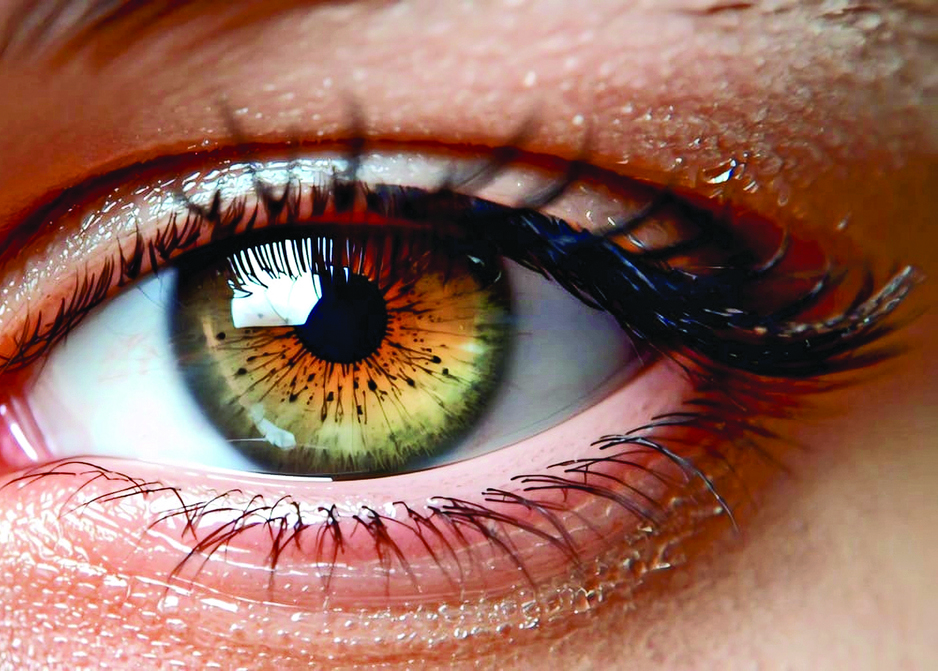
Yet, evolutionists are keen to point out something they think is such a design weakness that it cancels out the argument for the Creator that is supported so strongly by all the details listed above. The retina, the inner surface of the eye that holds the light-sensitive cells, is arranged “back to front,” meaning light passes through nerve cells and blood vessels before reaching the light-sensing photoreceptors (rods and cones) at the very back. This inverted structure requires the optic nerve to pass through the retina, creating a blind spot. The argument made by evolutionists is that this is a poorly designed arrangement that can only be explained by small tinkering changes over a long period of evolution, because no Intelligent Designer would have done it that way.
But this supposed “backward wiring” of the human eye is far from being a design weakness. Quoting Jonathan Wells, we read,
“The inverted retina is actually much more efficient than the ‘tidy-minded’ design imagined by evolutionary biologists. The blind spot is not a serious problem, first of all because it is so small and second of all because the blind spot produced by the left eye is not in the same place as the blind spot produced by the right eye. This means that in humans with two good eyes, the field of vision of one eye covers for the blind spot of the other eye, and vice versa.”
Light is not significantly blocked or distorted by the nerve cells and blood vessels, but rather, “researchers from the Israel Institute of Technology found that dense glial cells (also called Müller cells), which span the retinal depth and connect to the cones, guide light, just like fiber-optic cables, and hence improve vision. Thus, what some had claimed was a design weakness (backward wiring) that pointed to unguided and suboptimal evolutionary design is now known to be a design strength on multiple levels. The researchers started publishing their findings in 2010. By 2015 their research was well established and attracting widespread publicity. Despite this, evolutionists like Lents and Hafer are still claiming that the human eye is poorly designed due to being wired backwards.”
“Ultimate Engineering” includes many other examples2 of superb design, such as:
The extraordinary dexterity of the fingers.
From an evolution model, fingers should be only just good enough for primitive survival. Instead, they are able to make watches, play violins and repair damaged hearts, as well as being basic tools for survival. The finger tendons are “the ultimate pulley system.” “In 2023, a contestant, Max Park, broke the world record, solving the (Rubik’s) cube in 3.13 seconds using thirty-three rotations”—10.5 turns per second!
The spine, optimised for strength and flexibility.
Beset by design flaws, says the evolutionist, yet an engineering journal in 2018 explained, “The human spine has provided the inspiration for the design of a new low-cost bridge that could improve transport infrastructure resilience . . . Intervertebral disks in the spine provide flexibility, dissipate energy from the movements of the body and absorb and transmit forces without damaging the bones, and academics will base their new design around these concepts.”
Stuart Burgess concludes that,
“The human vertebral column is recognized by the biomechanics community as ultimate engineering. There are some similarities between the human back and the chassis of a Formula 1 race car. Both have to be very strong and robust and yet have some flexibility for shock absorption. The difference is that there is far more precision engineering and functionality in the human back than in even the best Formula 1 chassis.”
These are just a few of the stunning examples that have design engineers in awe, and defy explanation by mindless, directionless evolution. The truth of the Scriptures cannot be hidden:
“The hearing ear, and the seeing eye, the Lord hath made even both of them”—Proverbs 20:12.
“I will praise thee; for I am fearfully and wonderfully made: marvellous are thy works; and that my soul knoweth right well”—Psalm 139:14.
End Notes
https://www.discovery.org/b/ultimate-engineering/
Space does not permit including examples of design in the mouth, nose and throat, the jaw, the middle ear, the skin, birth mechanisms, blood circulation, digestive system, muscles and tendons and the nervous system.