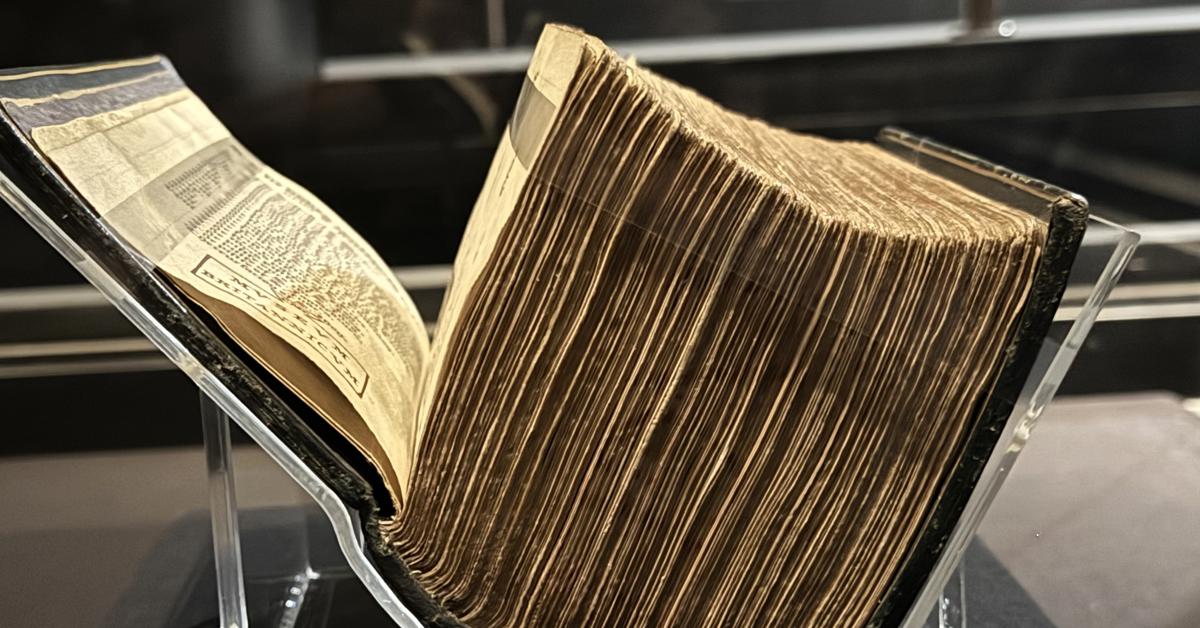
William Tyndale did not just want an English Bible; he wanted an accurate English Bible—one faithful to the original Hebrew and Greek, even if that accuracy would cost him his life.
For Tyndale, this wasn’t academic nitpicking; it was about eternal truth.
His conviction drove him to revise the New Testament he had first translated in 1526, and to publish the first printed English Old Testament from the Hebrew in 1530. This was the work of a man who had discovered, verse by verse, how deeply the New Testament was tied to the Old—and who realised that to translate the New Testament faithfully, he had to understand its roots in the Hebrew Scriptures.
By translating directly from Hebrew, Tyndale also broke with over a thousand years of tradition. Even Jerome’s Latin Vulgate: the “official” Bible of the church.
Tyndale’s decision meant that for the first time, English readers could hear the voice of Moses, David, and Isaiah without the filter of Latin.
This was deeply threatening to church authorities. To them, an English Old Testament meant not just a challenge to Latin tradition but also a danger that lay people could test church teaching against the law and prophets for themselves. In the wrong hands, Scripture could fuel reform—or, they feared, rebellion.
Opposition was swift.
In 1530, Henry VIII issued a proclamation condemning Tyndale’s Pentateuch and ordering that copies be burned wherever found. Ironically, Bishop Tunstall—who had once studied Greek with Erasmus—helped enforce this ban, even as he quietly recognised Tyndale’s scholarship.
Why the Old Testament mattered for the New
When Tyndale read the Greek New Testament, he saw Old Testament quotations and echoes on nearly every page. The Gospels and the Apostle Paul’s letters were anchored in the Law, the Psalms, and the Prophets.
If the foundation was misunderstood, the whole building leaned. That realisation drove him to the Hebrew language.
In early 16th-century Christian Europe, the Hebrew language was rare, largely preserved in Jewish communities. Patiently, he learned the grammar, vocabulary, and rhythms of the Old Testament for himself.
His 1530 translation of the Pentateuch (Genesis to Deuteronomy) was the fruit of that study—clear, concise, and tied closely to the Hebrew text.
His prefaces to these books also revealed his reforming heart.
In the introduction to Genesis, for example, he urged readers to see God’s covenant purposes unfolding through history, setting the stage for Christ. In doing so, Tyndale was not only translating Scripture but also teaching a Protestant way of reading it. In Leviticus, he added marginal notes explaining how the sacrificial system pointed forward to Christ’s death.
These notes were controversial because they went beyond translation. They directly challenged the Catholic view of sacrifice and priesthood.
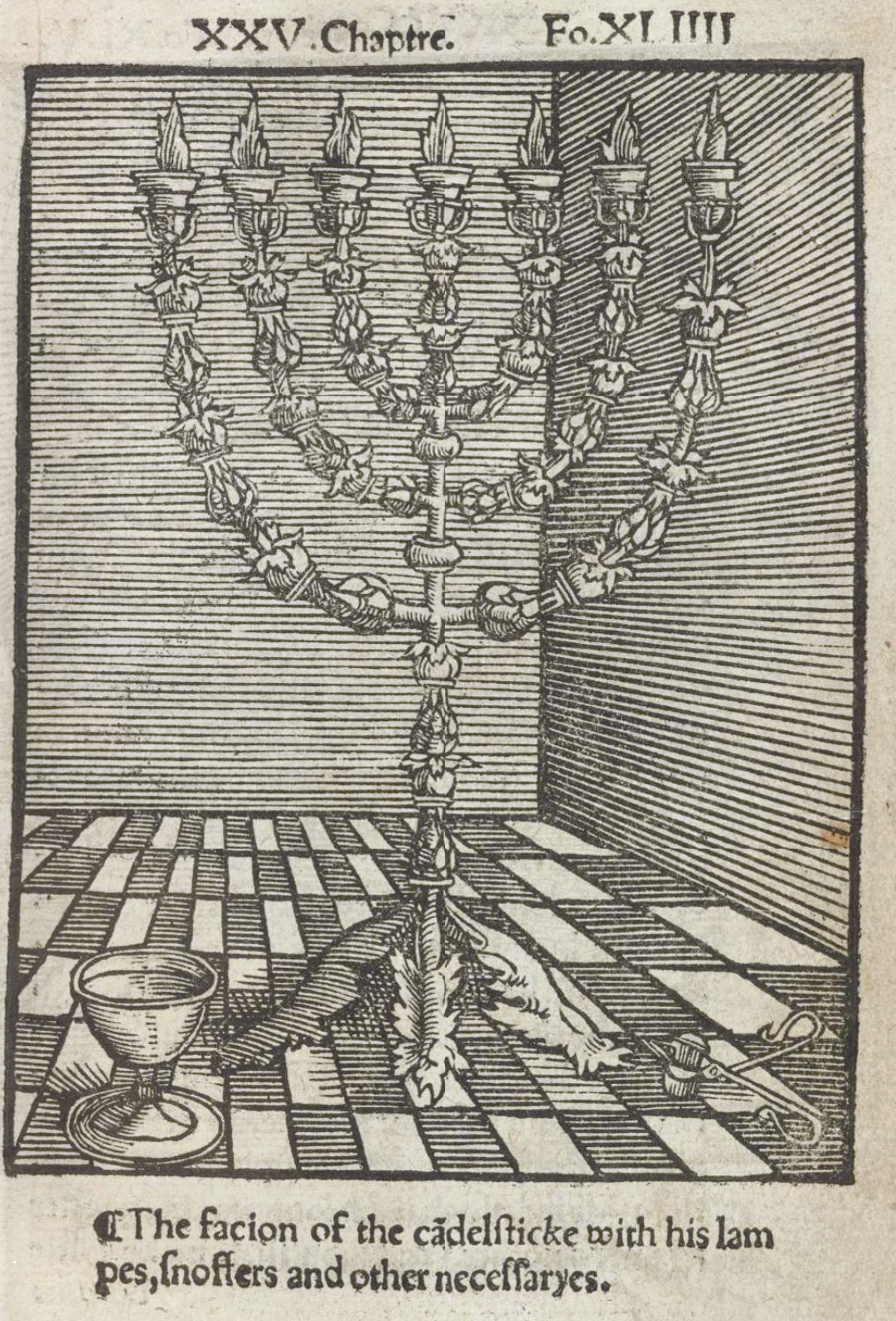
His translation of the Pentateuch also included woodcut illustrations and maps, helping readers visualise biblical places and events. This made Scripture more accessible, but it also gave the sense that the Bible was not just words on a page but the record of God’s dealings in real history.
The loss of a manuscript
In 1529, on a journey from Antwerp to Hamburg, disaster struck. Tyndale’s ship was caught in a storm and capsized. His precious translation work—almost certainly Deuteronomy—was soaked and ruined.
Imagine the icy water, the frantic grip on the chest of papers, and the sickening moment they slipped away.
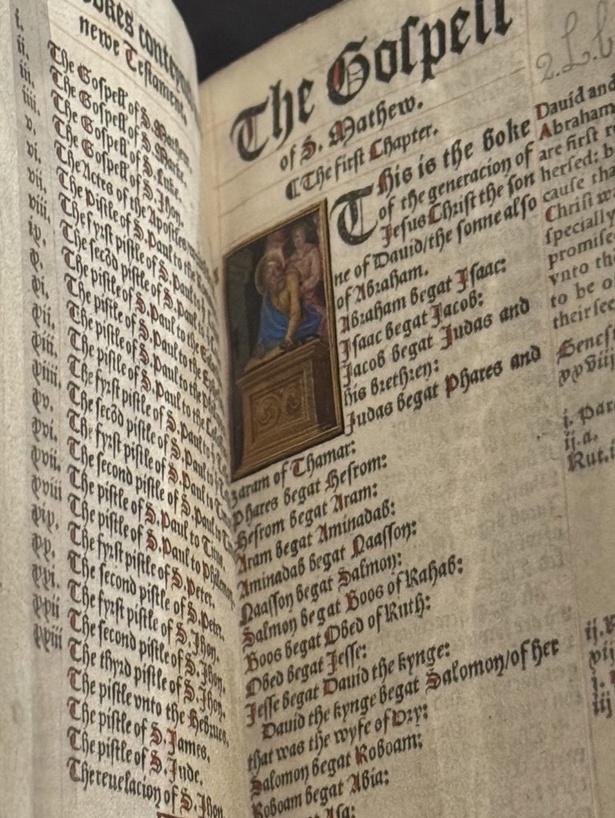
For a man who laboured over every word, it was a devastating blow. Yet he began again at once. The Word of God, to him, was worth rewriting from scratch.
The setback also shows his resilience.
Rather than being silenced by loss, Tyndale redoubled his efforts, producing not only the Pentateuch but also portions of Joshua through 2 Chronicles in the following years. Though these later books were not printed in his lifetime, manuscripts survived and influenced later English Bibles.
There is also evidence that Tyndale began translating parts of the prophet Jonah, a book later incorporated into the Matthew Bible of 1537. His range of work shows that his goal was always the complete Bible, even though his life was cut short before he could finish it.
By the time of his arrest in 1535, Tyndale is believed to have translated nearly half of the Old Testament. Had he lived longer, it is likely that a full English Bible from the Hebrew and Greek would have appeared years before the King James Version.
George Joye and the resurrection
Picture the moment for Tyndale. Your Bible is everywhere! Thousands of copies are in circulation. The Word of God, once chained, is running free at last.
The ploughboy is reading the Scriptures for himself.
But then the blow. In 1534, William Tyndale learned that George Joye, a fellow reformer, had reprinted his New Testament. He hadn’t made his own translation. He had taken Tyndale’s work and tampered with it.
The worst change came in the heart of the gospel: the resurrection. The Greek word anastasis means “resurrection.” In 1 Corinthians 15—Paul’s great resurrection chapter—Joye swapped it out for the vague phrase “life after this life.”
To Tyndale, this was unthinkable. Without resurrection, Paul says, “your faith is vain” (1 Corinthians 15:17). Take it away, and the gospel collapses into nothing but moral advice. With it, we have unshakable hope: “your labour is not in vain in the Lord” (verse 58).
And Joye hadn’t stopped there.
He meddled with other verses about the afterlife and judgment, softening the sharp edges of Scripture. Worst of all, these changes were being sold under Tyndale’s own name.
For Tyndale, this was intolerable. Better no Bible at all than a corrupted Bible. Accuracy mattered more than speed, more than numbers, more even than his own survival.
The Word of God could be burned— but it must never be bent.
So he acted. Later that same year, he released his own authorised revision: the 1534 New Testament. It was sharper, clearer, more faithful to the Greek than ever before.
This was Tyndale’s masterpiece.
The clash with Joye revealed the heart of Tyndale’s calling. Others rushed to print. Tyndale refused to rush truth. For him, accuracy was worship.
History proved him right. Joye’s edition sank into obscurity. Tyndale’s 1534 revision became the English New Testament for a generation—shaping faith, language, and worship until the Geneva Bible of 1560, and echoing still in the Bibles we read today.
Accuracy you can see
Tyndale’s 1534 revision of the New Testament was a careful reworking shaped by his deeper knowledge of the Hebrew Scriptures and a sharper command of Greek. The results are clear when you compare his 1526 and 1534 editions.
This matches later translations almost word for word, and it is exactly how Jesus quotes it in Matthew 22:37, showing Tyndale’s consistency across the Old and New Testaments.
The 1534 New Testament also introduced clearer chapter summaries and marginal notes to help readers follow the argument of each book. This made it not only a translation but also a study Bible of sorts, equipping ordinary believers to read with understanding.
Lessons for us
Tyndale’s work in 1530 and 1534 reminds us that the Bible we hold today came at a cost—and that accuracy still matters for faith. His life calls us to:
Value the Bible we have—Tyndale died so we could read it freely. Don’t let it gather dust.
Go deeper in the Word—Use study tools, compare passages, and be like the Bereans who “searched the scriptures daily” (Acts 17:11).
Hold to the hope of resurrection— Live and labour knowing that when Christ returns, the dead in Christ will rise and we will stand again in the resurrection morning.
We hold in our hands the Bible he could only hold in chains—will we treasure it, or take it for granted?